
It’s rarely one big risk that causes a fall — it’s ten small ones, and every single one is fixable this weekend.
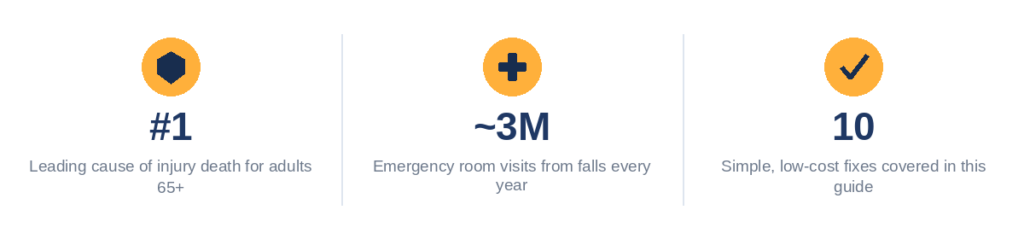
Falls are the leading cause of injury-related death among adults age 65 and older in the United States, and they send nearly 3 million older adults to the emergency room every year, according to the CDC’s Older Adult Fall Prevention program. The good news is that most falls are preventable, and many of the most effective changes cost little to nothing and take less than a weekend to make. Below are 10 practical, evidence-based fall prevention tips drawn from CDC and National Institute on Aging (NIA) guidance, designed for seniors living at home and the family members helping them stay safe.
Why Fall Prevention Matters
A single fall can change the course of an older adult’s independence. Beyond the physical injury — which for adults over 65 often means a hip fracture, head injury, or a hospital stay — a fall frequently leads to a lasting fear of falling again. That fear on its own can cause someone to move less, which weakens muscles and balance further and, ironically, raises the risk of a second fall. Most falls at home happen because of a combination of small, fixable hazards rather than one dramatic cause: poor lighting, loose rugs, cluttered walkways, unsupportive footwear, and muscles that have gradually weakened from inactivity. None of these require a major renovation to fix. Addressing them one at a time, room by room, makes a measurable and lasting difference in fall risk.
Quick-Reference Checklist
| # | Tip | Where to focus |
|---|---|---|
| 1 | Clear walking paths | Hallways, living room, bedroom |
| 2 | Secure or remove loose rugs | Hallways, bedside, entryways |
| 3 | Improve lighting | Hallways, stairs, bathroom path |
| 4 | Install grab bars | Bathroom (tub, shower, toilet) |
| 5 | Add non-slip mats | Bathroom and kitchen floors |
| 6 | Wear supportive footwear | Indoors and outdoors |
| 7 | Reorganize storage | Kitchen and closets |
| 8 | Review medications | Annually, with a doctor or pharmacist |
| 9 | Check vision and hearing | Annually |
| 10 | Stay active with balance exercises | A few minutes daily |
1. Clear Walking Paths of Clutter
Boxes, cords, shoes, and loose furniture left in hallways or high-traffic areas are among the most common fall hazards. Walk through the home and remove anything sitting in a regular walking path, and route electrical and phone cords along walls rather than across open floor space.
2. Secure or Remove Loose Rugs
Throw rugs and mats are a leading cause of trips, especially on hard flooring. Use double-sided carpet tape or a non-slip rug pad to secure them, or remove them entirely from high-traffic areas like hallways and the space beside the bed.
3. Improve Lighting Throughout the Home
Dim or uneven lighting makes it harder to spot hazards, especially at night. Add nightlights along the path from the bedroom to the bathroom, use higher-wattage bulbs where allowed, and make sure light switches are easy to reach from the doorway rather than requiring a walk across a dark room. Motion-activated lights are worth the small investment for stairways and hallways, since they remove the need to fumble for a switch in the dark — one of the most common moments when a nighttime fall happens.
4. Install Grab Bars in the Bathroom
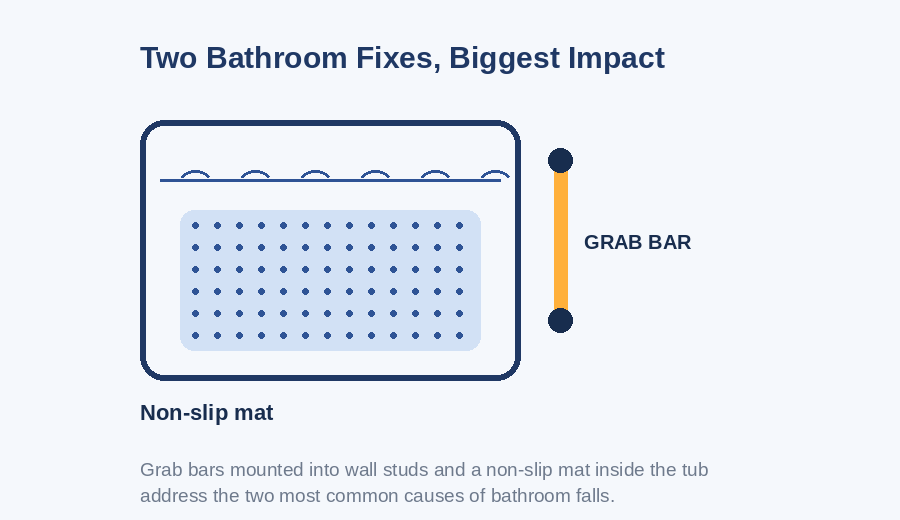
The bathroom is one of the most common places for falls, particularly around the tub, shower, and toilet. Grab bars — professionally installed into wall studs, not suction-mounted — give seniors a stable point of support for sitting, standing, and stepping in and out of the shower.
5. Add Non-Slip Mats to Bathrooms and Kitchens
Wet floors in bathrooms and kitchens are a frequent fall trigger. Non-slip mats or adhesive strips inside the tub and shower, and in front of the sink and stove, reduce the risk of slipping on wet surfaces.
6. Wear Supportive, Non-Slip Footwear
Walking around the house in socks, loose slippers, or bare feet increases the chance of slipping. Supportive shoes with non-slip soles — worn even indoors — provide better traction and ankle support than soft slippers or stocking feet.
7. Keep Frequently Used Items Within Easy Reach
Reaching for items on high shelves or bending down to low cabinets, especially using a step stool or chair for balance, is a common cause of falls. Rearranging kitchen and closet storage so everyday items sit between waist and shoulder height removes the need for climbing or overreaching.
8. Review Medications With a Doctor or Pharmacist
Some medications — including certain blood pressure drugs, sedatives, and antihistamines — can cause dizziness, drowsiness, or balance problems as a side effect. An annual medication review with a doctor or pharmacist can catch combinations or dosages that may be increasing fall risk.
9. Get Regular Vision and Hearing Checkups
Uncorrected vision changes make it harder to judge distances, spot uneven surfaces, or see obstacles in low light, and hearing loss can affect balance and spatial awareness as well. The CDC recommends an annual eye exam for older adults, along with periodic hearing checks, as part of a broader fall prevention routine. If new glasses or a stronger prescription is needed, it’s also worth taking a few days to adjust before walking through unfamiliar or cluttered spaces, since a lens change can temporarily throw off depth perception.
10. Stay Physically Active With Balance and Strength Exercises
Strength and balance naturally decline with inactivity, which raises fall risk over time. The CDC recommends older adults aim for about 150 minutes of moderate activity per week, such as brisk walking, plus two days a week of muscle-strengthening exercise. Simple balance exercises — like standing on one foot while holding a counter, or heel-to-toe walking — can be done at home in just a few minutes a day.
What to Do If a Fall Happens Anyway
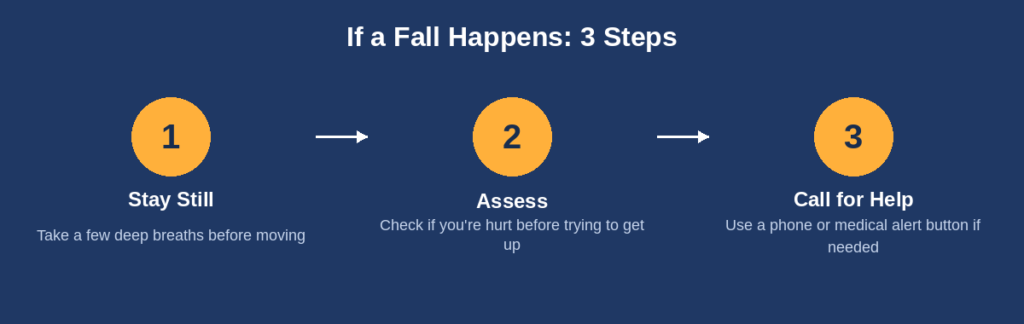
Even with every precaution, falls can still occur, and having a plan matters as much as prevention. The NIA recommends staying still for a moment after a fall, taking a few deep breaths, and assessing whether you’re hurt before attempting to get up. If you’re injured or unable to get up safely, stay put and call for help rather than risking a second fall. This is exactly the scenario a medical alert system is designed for: a wearable button that connects directly to a 24/7 monitoring center, even if the phone is out of reach.
Frequently Asked Questions
What is the single most effective fall prevention step for seniors? There’s no single fix, but removing loose rugs and clutter from walking paths is one of the fastest, lowest-cost changes with the biggest immediate impact.
How much of a difference does exercise really make? A meaningful one. Regular balance and strength training is consistently linked to lower fall risk in older adults, according to CDC guidance, because it directly addresses the muscle weakness and poor balance that lead to falls in the first place.
Should every senior have grab bars installed, even if they haven’t fallen before? Yes — grab bars are a preventive measure, not just a response to a previous fall. Installing them before an incident happens is safer and often easier than retrofitting a home afterward.
Can a medical alert system actually prevent falls? No, but it reduces the danger of falls that do happen by making sure help can be reached quickly, even if the person can’t get to a phone.
How quickly can these changes actually be made? Most of the highest-impact steps — clearing clutter, securing rugs, adding nightlights, and switching to supportive footwear — can be done in a single afternoon. Larger changes, like installing grab bars, typically take a few days to schedule and complete but are still a short-term project, not a renovation.
Related Reading
- Bathroom Safety for Seniors: Grab Bars, Mats, and More
- What to Do If Your Elderly Parent Falls and Can’t Get Up
- Home Safety Checklist for Aging Parents (Free Printable)
- Medical Guardian vs Life Alert: Which Medical Alert System Is Better in 2026?